



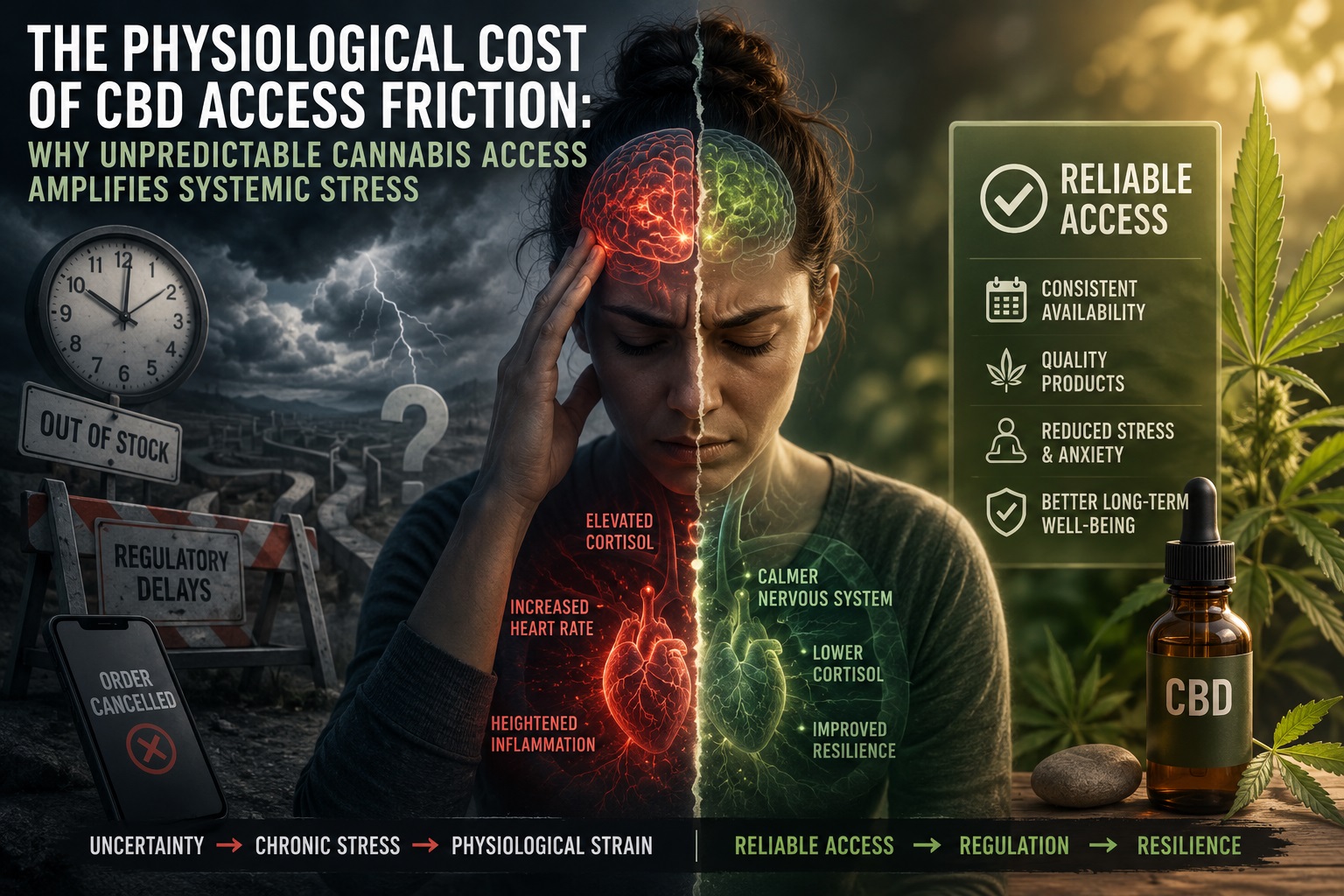
Stress isn’t just what happens inside the body, it’s also what happens in the gap between needing help and actually getting it. That gap is rarely talked about in clinical language, but people feel it instantly. When the body is already on edge, even small delays, unclear availability, or broken systems don’t stay “logistical” for long, they become physiological pressure.
That’s the uncomfortable truth modern wellness systems are only beginning to admit: access isn’t separate from health. It actively shapes it. Modern biology doesn’t politely divide stress into categories like “medical” and “external.” The nervous system reacts to both the same way as escalation. Delayed cannabis access can trigger physical pain fast. That means the system around care can either calm someone down or keep them stuck in activation.
- Activates the Cortisol of Scarcity
Scarcity today is rarely absolute. It’s more subtle than that. It shows up as uncertainty, a product that might be unavailable, a delivery window that keeps shifting, and a system that works sometimes but not always. And that “maybe” state is where stress compounds. For someone already dealing with anxiety or chronic strain, uncertainty around access becomes its own loop.
The damage of a delayed delivery begins long before the delivery is actually missed. The moment the brain perceives that access is unreliable, it immediately spikes cortisol, vigilance increases, and the system shifts into readiness mode as if something needs to be defended against. It’s not the absence of relief that does the damage, it’s the instability of access.
A broken delivery system actively feeds the very illness the patient is trying to treat through a chain of occurrences.
Anticipation → tension → physiological activation → increased need for relief → heightened sensitivity to uncertainty.
Breaking this feedback cycle requires partnering with a reliable dispensary and accessories store for availability certainty and easy access. This is where advanced scheduling and reliable fulfillment infrastructure, such as automated Fast Vape Delivery networks, move from a logistical convenience to a critical clinical intervention.
By guaranteeing a predictable, automated pipeline for essential supplies, advanced scheduling eliminates the ‘maybe’ state entirely. The nervous system no longer has to maintain a defensive posture because the future supply is already verified, effectively shutting down the cortisol cascade before it can initiate
- Disregulates Pulse and Real-Time Feedback Curves
Within harm-reduction thinking, speed isn’t about intensity, it’s about control. For example, vaporized cannabinoids sit in a very specific space physiologically because they allow the body to respond in real time. Because vaporized cannabinoids enter the bloodstream through the lungs almost instantly, the patient can blunt anxiety spike the moment it begins.
That responsiveness matters. When intervention is delayed or overly prolonged, the timing often doesn’t match the stress curve. Effects can peak after the moment has already passed, creating a mismatch between internal state and external modulation. In some cases, that mismatch complicates emotional regulation and heart rate variability instead of stabilizing it.
Fast, adjustable delivery methods shift that dynamic. They don’t override the system, they allow feedback to stay current. In practical terms, that means the body isn’t guessing anymore. It’s responding. However, ensuring you do go over your CBD dosage is crucial to preventing a systemic relapse into chronic activation, excess fatigue, or harmful interactions with prescription medications.
- Overloads the Reactive System: The Chronic Strain of Anticipation
Most systems of care still operate reactively: something runs out, a patient panics, and only then does infrastructure respond. This flawed model quietly assumes a stressed body can afford to wait for escalation before support arrives. In reality, when access is left unpredictable, the nervous system is forced into a state of hyper-vigilance, constantly scanning for disruption.
This chronic scanning burns massive amounts of background metabolic energy as the brain repeatedly processes a survival question: ‘What if I can’t get what I need?’ Left in this permanent anticipation mode, the body remains stuck in a high-alert activation loop.”
When the human body is already under stress, any added uncertainty in access becomes another load on top of an already overloaded system. That’s why streamlined fulfillment models and partnering with reliable stores matter beyond convenience. They reduce the number of unnecessary stress triggers embedded in everyday life. As predictive fulfillment move products faster, it also removes the emotional volatility caused by unpredictable access.
In essence, stress regulation isn’t only a biological process, it’s an environmental one. The nervous system is constantly reading the world for signals of stability or disruption. When access becomes reliable, predictable, and low-friction, the body has fewer reasons to stay in defense mode. And that’s the real shift: not just treating stress, but refusing to let broken systems keep generating it. However, ensuring you are using only quality and legit products is crucial for your safety and efficacy.
More Stories
Understanding the Worldwide Reach of Modern Spine Care
San Pedro Powder: Uses, Characteristics, and Buying Considerations
How Hearing Aid Doctors Help Seniors Improve Communication